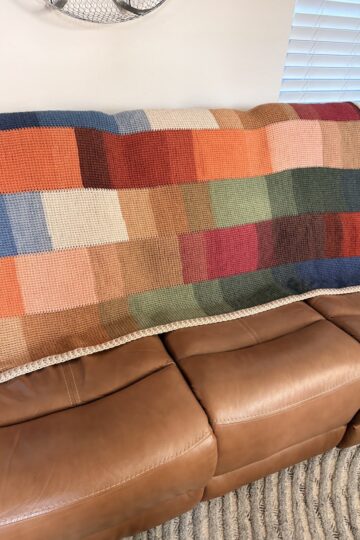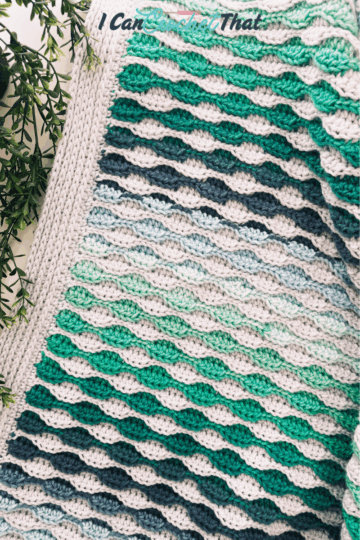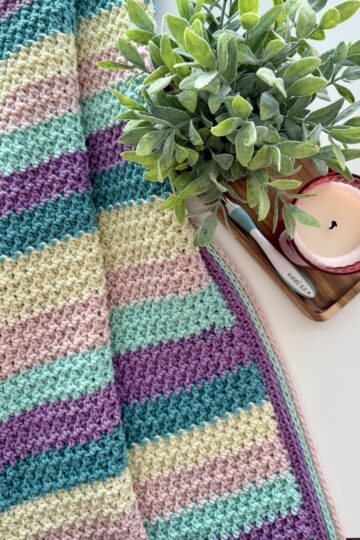
If you’ve looked through my crochet patterns, you’ve probably noticed I really love self-striping yarn.
And one of my favorite stitches to pair with it is the linen stitch.
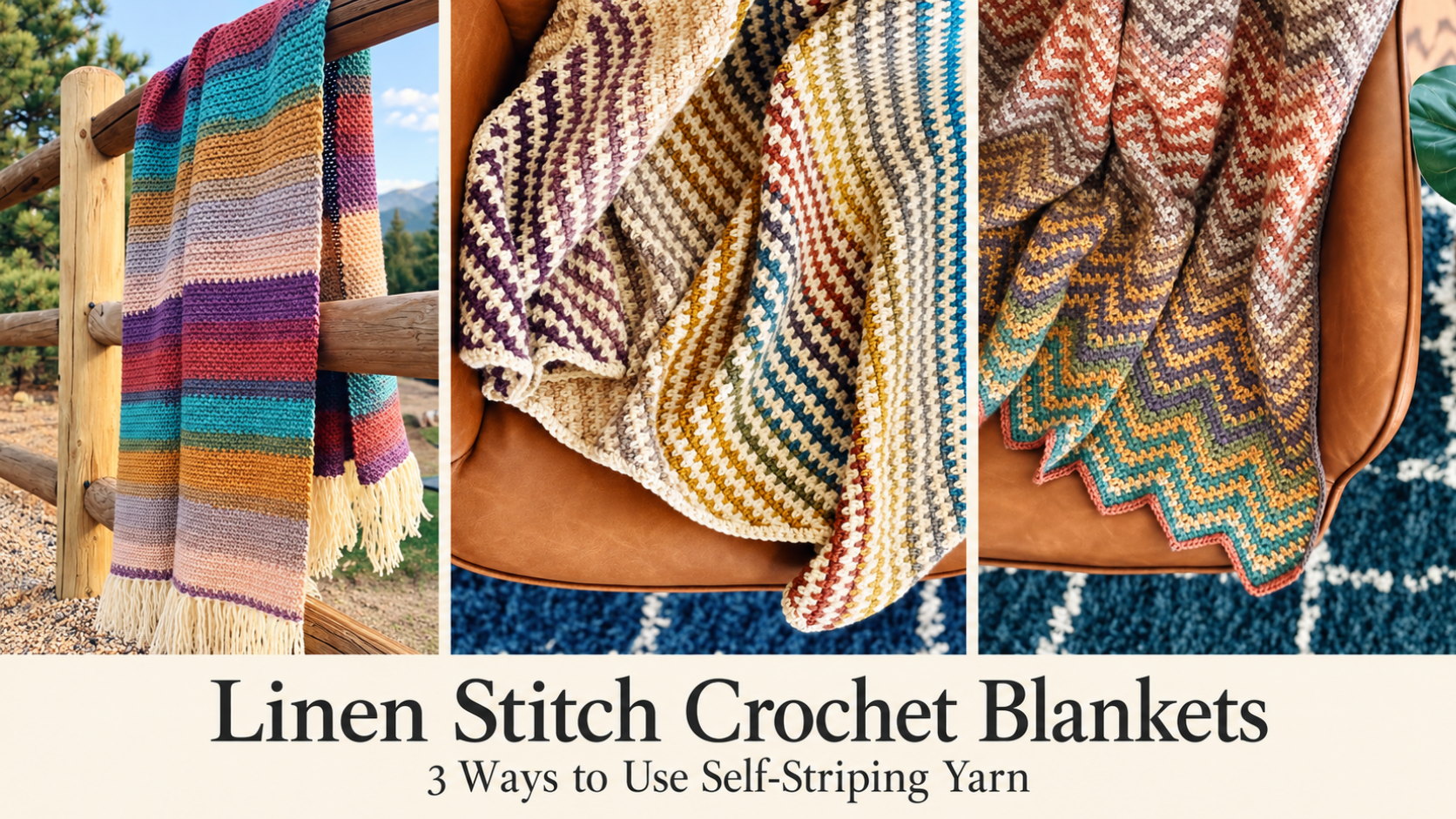
It’s simple, relaxing, and beginner-friendly, but it creates a beautiful woven texture that makes every color in a self-striping yarn stand out.
Even better, it handles those unexpected mid-row color changes much more gracefully than many taller crochet stitches.
Today I’m sharing three blankets that combine linen stitch and Lion Brand Mandala yarn in completely different ways:
- The Estes Blanket lets one self-striping colorway do all the work.
- The Penny Blanket pairs self-striping yarn with a solid neutral.
- The Teagan Blanket alternates two self-striping colorways.
It’s the same basic stitch idea, but each method creates a completely different result.
Is It Linen Stitch, Moss Stitch or Granite Stitch?
You may have heard this stitch called linen stitch, moss stitch, or granite stitch.
In most modern crochet patterns, these names are used interchangeably. The basic stitch pattern alternates single crochet stitches and chain-one spaces. On the following row, the single crochet stitches are worked into the chain-one spaces.
That simple combination creates a fabric with a lightly woven appearance. It has beautiful drape without being overly lacy, and once you understand the repeat, it’s a wonderfully relaxing stitch to crochet.
You’ll also see variations of the basic stitch worked corner to corner or shaped into ripples. That’s exactly what I did with the Penny and Teagan blankets.
If this stitch is new to you, you can watch my linen stitch video tutorial here.
Why Linen Stitch Works So Well With Self-Striping Yarn
Self-striping yarn can sometimes be unpredictable. A new color may begin at the edge of a row or right in the middle of one.
With taller stitches, that sudden transition can create a hard vertical break in the stripe. Linen stitch uses short single crochet stitches separated by chain spaces, which helps the colors blend together more naturally.
It’s also a fairly simple stitch, so it doesn’t compete with a colorful yarn. The yarn creates the visual interest while the stitch adds subtle texture.
Here are a few reasons I keep coming back to this combination:
- The short stitches soften unexpected color changes.
- The woven texture showcases each new shade.
- The stitch is simple enough to let a colorful yarn remain the focus.
- It creates a lightweight fabric with lovely drape.
- It works in straight rows, corner-to-corner construction and ripple patterns.
- Every yarn cake creates a slightly different blanket.
These three patterns show just how versatile the combination can be.
The Estes Blanket: Let One Self-Striping Yarn Shine
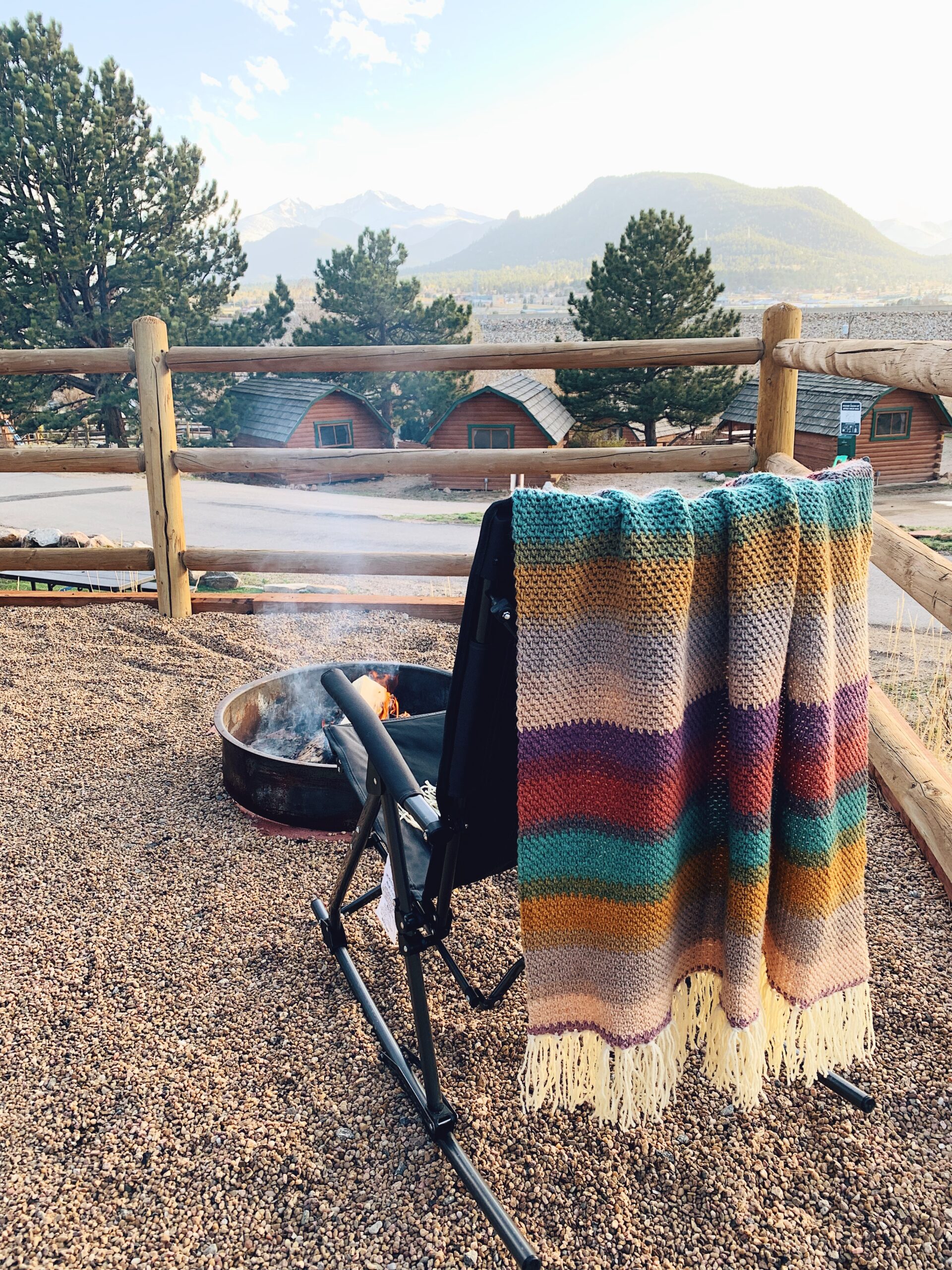
The Estes Blanket is the simplest of the three approaches.
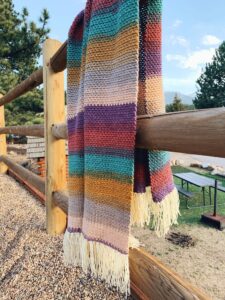
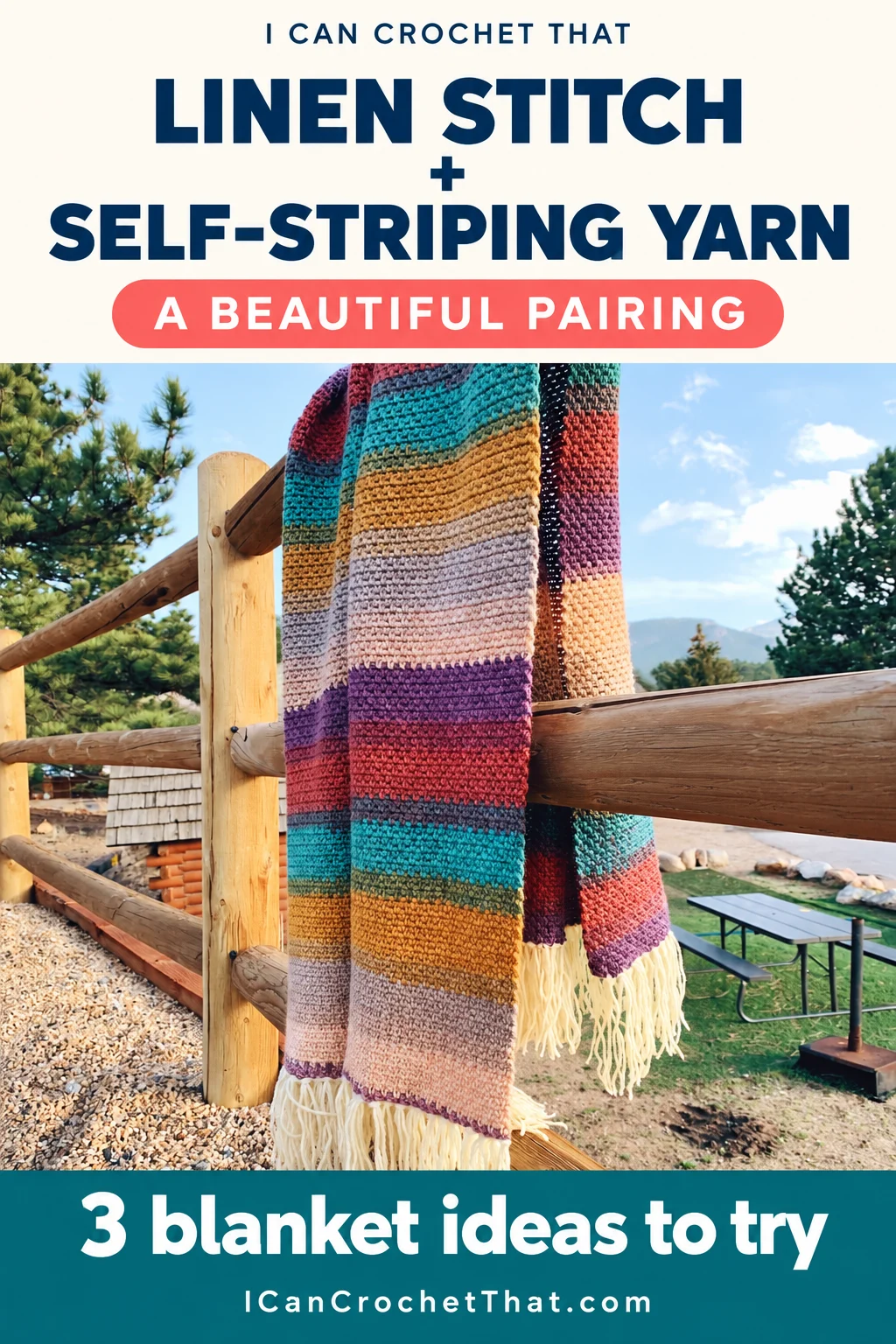
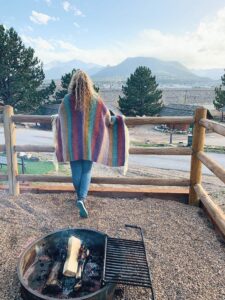
The body of the blanket is crocheted in straight rows using Lion Brand Mandala yarn and the traditional linen stitch. There are no planned color changes. You simply continue crocheting and let the yarn cake create the stripes.
This is one reason linen stitch works so well here. Some Mandala color changes will naturally happen in the middle of a row, but the small stitches and woven texture help those transitions blend into the overall design.
The result is a colorful, lightweight blanket that looks far more complicated than it actually is.
The Estes measures approximately 36 by 58½ inches and was originally designed as a camping blanket. It uses four Mandala cakes in the Warlock colorway, with an optional contrasting fringe.
This is the method I would choose if you want the easiest introduction to combining linen stitch with self-striping yarn.
Best for: Letting one self-striping colorway do all the work
Construction: Traditional rows
Skill level: Beginner-friendly
Pattern: Get the free Estes Blanket pattern here
The Penny Blanket: Pair Self-Striping Yarn With a Neutral
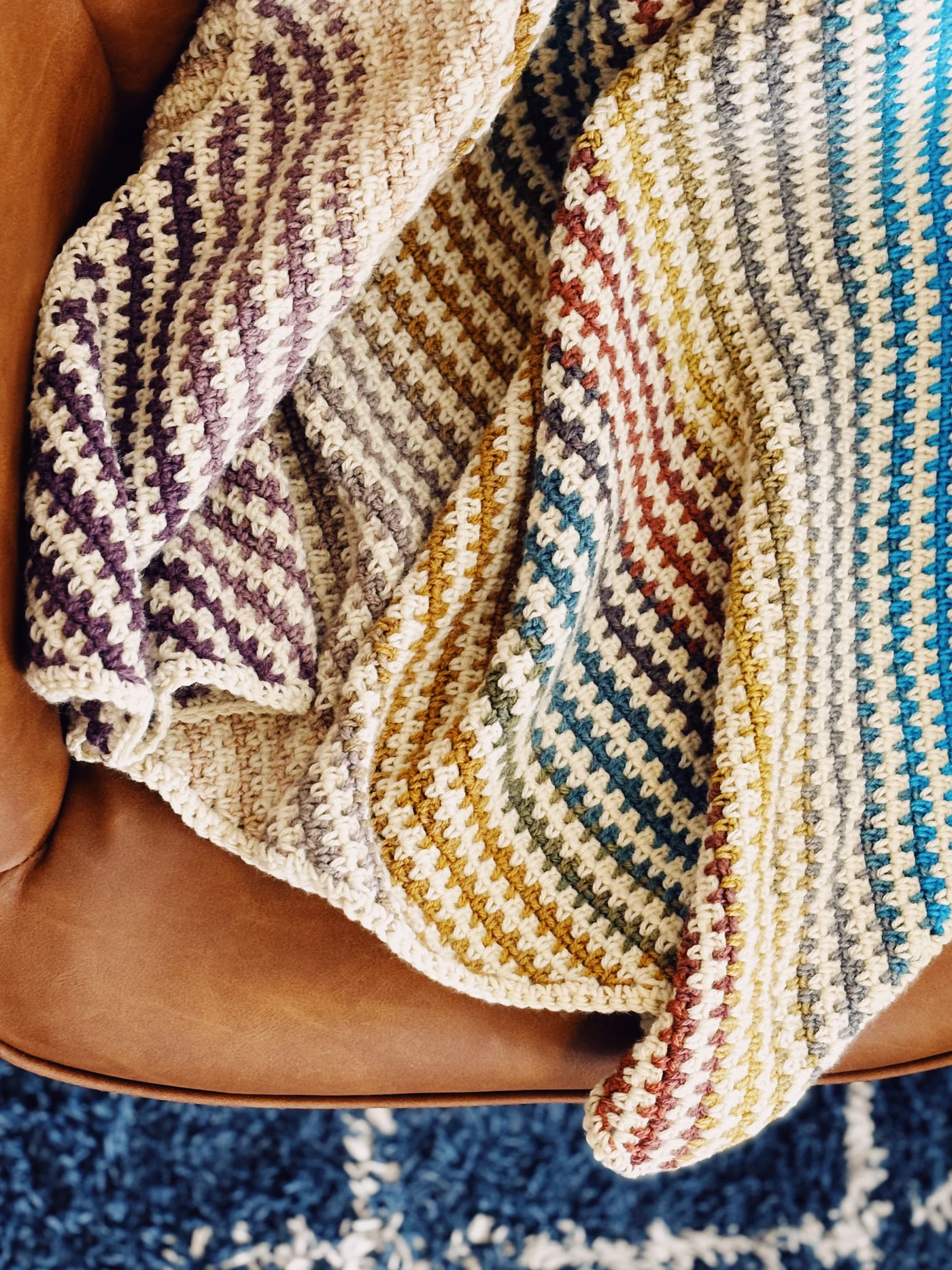
The Penny Blanket uses the same basic stitch in a completely different construction.
Instead of working from the bottom edge upward, this blanket is worked corner to corner. It starts small, increases to the desired size, and then decreases again.
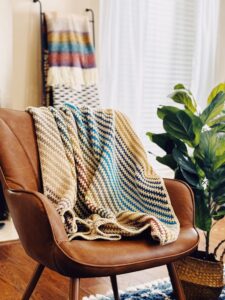
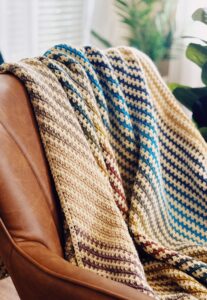
The pattern alternates two rows of a solid neutral with two rows of leftover Mandala yarn. The solid color breaks up the brighter color changes and gives the blanket a softer, more balanced appearance.
It’s also a great way to use leftover portions of self-striping yarn cakes. You don’t need three perfectly matched cakes. You can mix different pieces and colorways throughout the blanket, with the neutral yarn tying everything together.
The diagonal construction adds another layer of movement, making the stripes travel across the blanket instead of straight from side to side.
You carry the unused yarn along the edge instead of fastening off after each color change, then cover the yarn carries with the border.
The finished Penny Blanket measures approximately 46 by 48½ inches. Instructions are also included for turning the square construction into a rectangle.
Best for: Leftover yarn cakes and a more balanced color palette
Construction: Corner-to-corner moss stitch
Color method: Two rows of neutral and two rows of self-striping yarn
Pattern: Get the free Penny Blanket pattern here
The Teagan Blanket: Combine Two Self-Striping Colorways
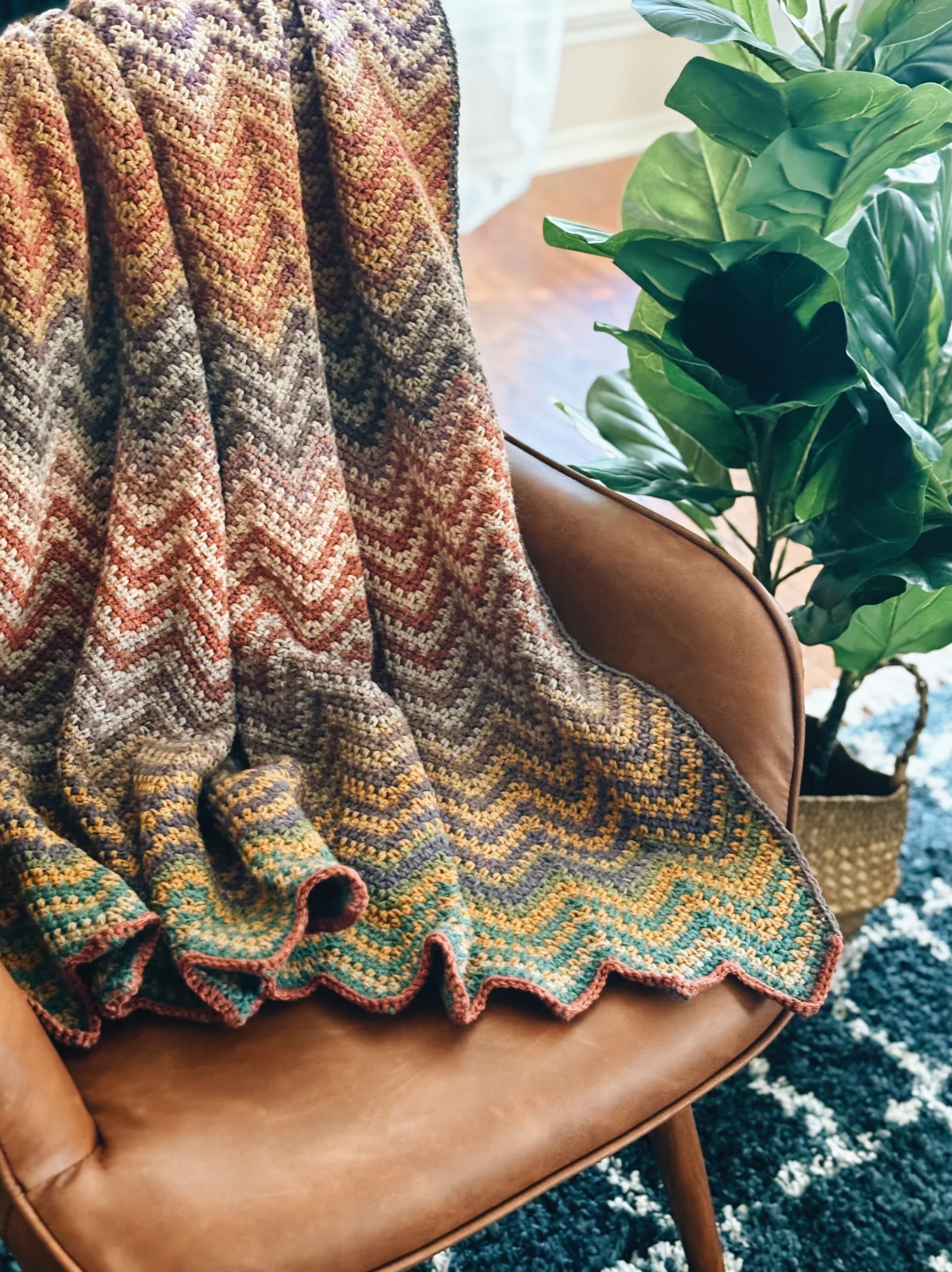
The Teagan takes the color play one step further by combining two different Mandala colorways.
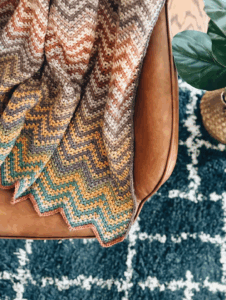
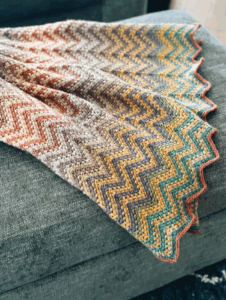
This blanket uses the ripple moss stitch, which turns the straight-stitch texture into colorful peaks and valleys. Instead of allowing one cake to create all the stripes, you alternate between two self-striping yarns every two rows.
Because both yarns change colors independently, the combinations keep shifting as you crochet. One section may pair teal with gold, while the next brings together plum, rust, or gray.
That unpredictability is exactly what makes the Teagan so fun. No two blankets will look exactly alike, even when crocheters begin with the same two colorways.
You don’t need to fasten off after every two rows. You can carry the yarn up the side and cover it later with the border, which saves time and keeps the number of ends under control.
The ripple shaping makes this the most advanced of the three patterns, but it’s still based on the familiar single crochet and chain-space rhythm of linen stitch.
Best for: Bold color, movement and a completely unique result
Construction: Ripple moss stitch
Color method: Two self-striping colorways alternated every two rows
Skill level: Intermediate
Pattern: Purchase the Teagan Blanket pattern in the ICCT Shop
You can also purchase the Teagan Blanket pattern on Etsy.
Three Blankets, Three Ways to Use Self-Striping Yarn
If you’re trying to decide which method to use, here’s the simplest way to compare them:
Choose the Estes if…
- You want the easiest method.
- You have several cakes in one colorway.
- You want the yarn to create the stripes automatically.
- You prefer working a blanket in traditional rows.
Choose the Penny if…
- You have partial or leftover yarn cakes.
- You want to soften colorful yarn with a neutral.
- You enjoy corner-to-corner construction.
- You want to combine several colors without the blanket feeling too busy.
Choose the Teagan if…
- You want to experiment with two self-striping colorways.
- You love bold, unexpected color combinations.
- You’re comfortable with an intermediate stitch pattern.
- You want a blanket that will be completely unique.
Which Linen Stitch Blanket Would You Make?
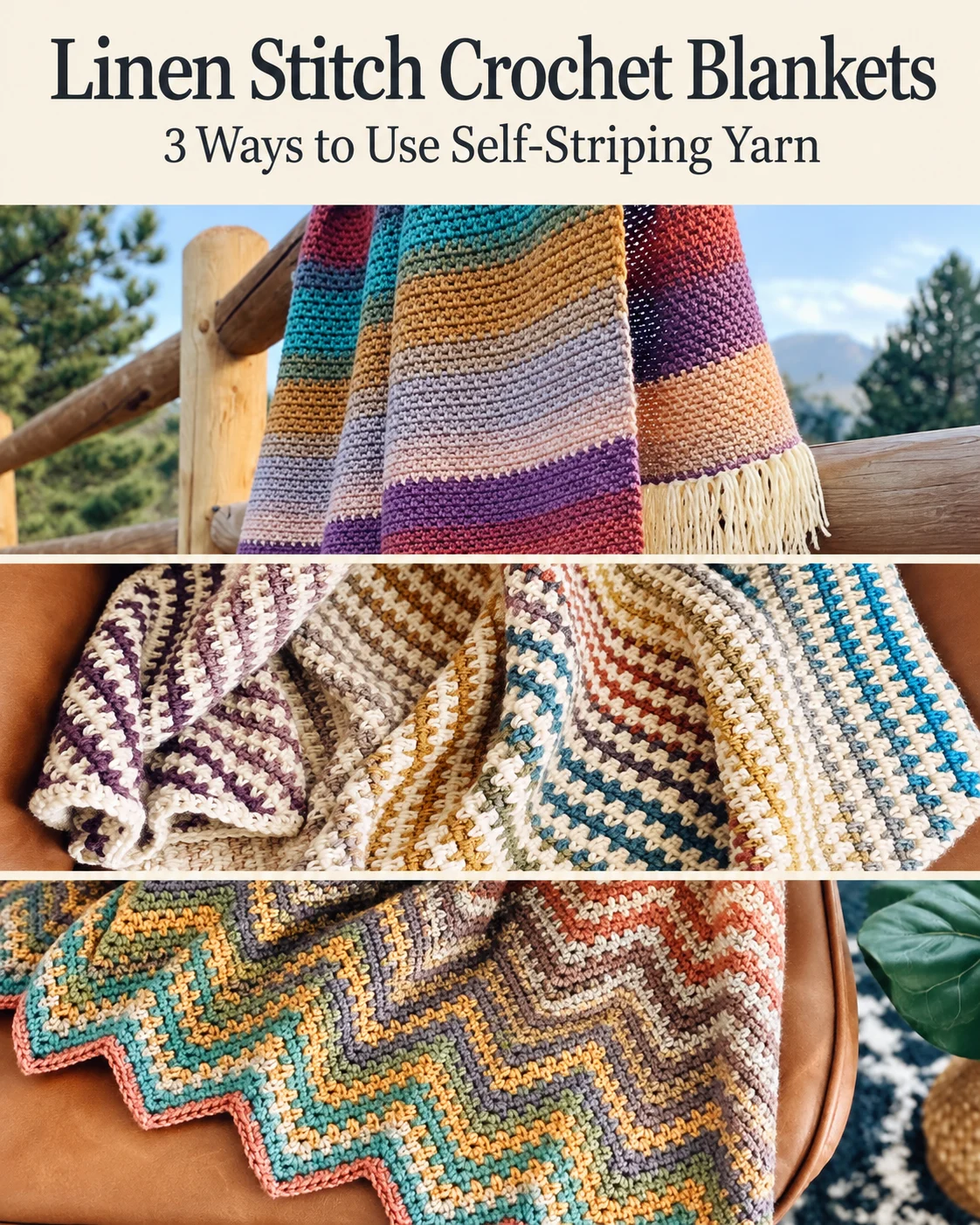
That’s what I love most about linen stitch: it gives you a simple foundation, but changing the construction or the way you use color can create an entirely different blanket.
You can let one yarn cake change colors naturally, place a neutral between the colorful rows or combine two self-striping yarns for something bold and unexpected.
Which one is your favorite...the Estes, Penny, or Teagan?
If you make one of these blankets, tag me on Instagram at @icancrochetthat. I always love seeing the colors you choose!